
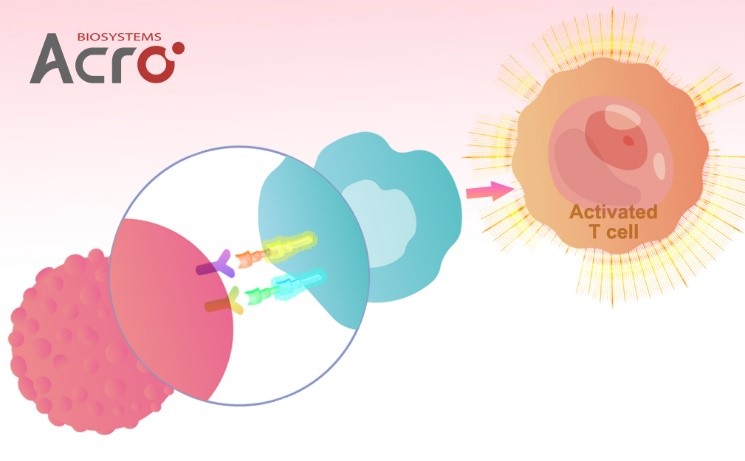
T淋巴細(xì)胞如何被激活?
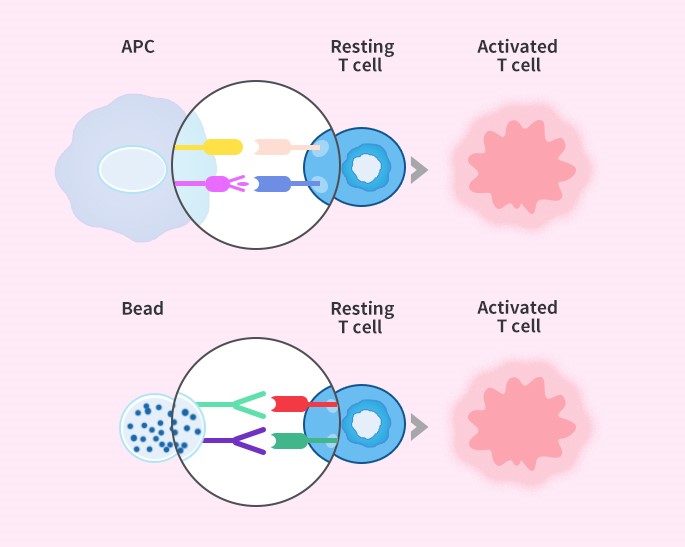
>>>點(diǎn)擊了解GMP級(jí)別細(xì)胞因子
細(xì)胞治療領(lǐng)域中T細(xì)胞的激活
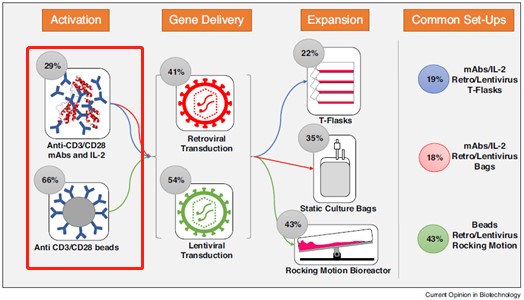
為支持細(xì)胞治療藥物的開(kāi)發(fā),ACROBiosystems?自主開(kāi)發(fā)了高質(zhì)量的CD3/CD28抗體偶聯(lián)磁珠產(chǎn)品(貨號(hào):MBS-C001),經(jīng)細(xì)胞水平驗(yàn)證,可高效刺激擴(kuò)增T細(xì)胞,更好的助力細(xì)胞治療藥物的開(kāi)發(fā)進(jìn)程。
?

★?5.5 μm大小,可更好的模擬APC,刺激T細(xì)胞
★?磁性強(qiáng),輕松分離,磁珠不易殘留
★?超低內(nèi)毒素(< 2EU/mg),對(duì)T細(xì)胞無(wú)傷害
★?經(jīng)細(xì)胞水平驗(yàn)證,可高效激活擴(kuò)增T細(xì)胞

??Anti-CD3/CD28 Antibody-coupled Magnetic Beads (Cat. No.?MBS-C001) 可高效激活T細(xì)胞
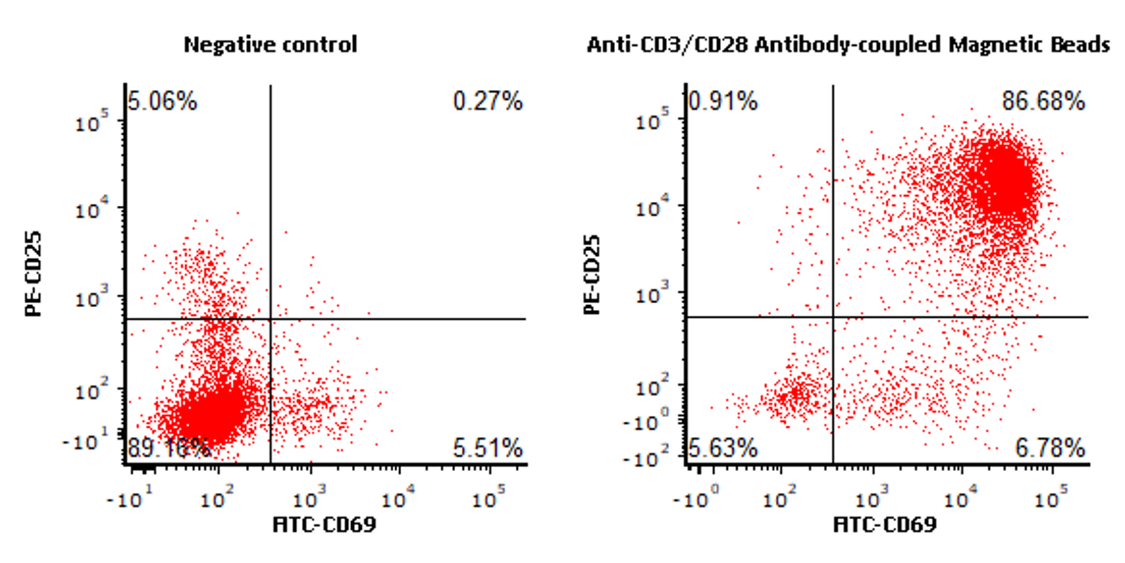
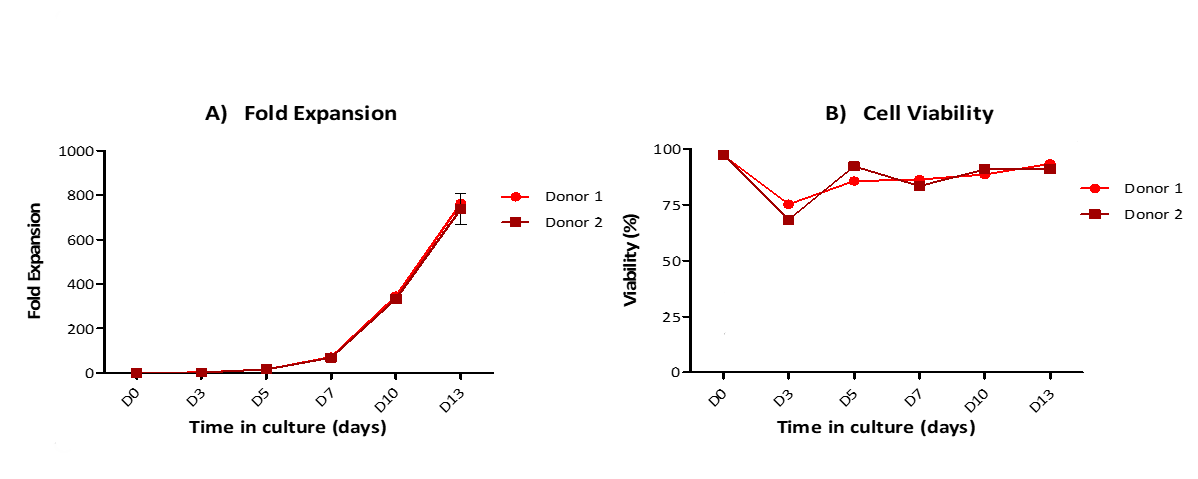
???經(jīng)Anti-CD3/CD28 Antibody-coupled Magnetic Beads (Cat. No.?MBS-C001)?刺激后,可對(duì)T細(xì)胞進(jìn)行有效擴(kuò)增
競(jìng)品對(duì)比數(shù)據(jù)
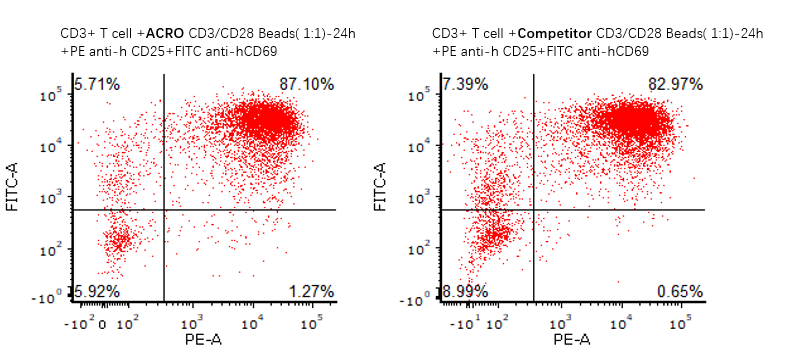
The purified human T cells were activated using ACRO Anti-CD3/CD28 Antibody-coupled Magnetic Beads (Cat. No.?MBS-C001) and competitor’s beads respectively at a ratio of 1:1 beads-to-cells for 24 hours with RPMI1640 supplemented with 10% of FBS. Cells were fluorescently stained using PE labeled anti-human CD25 antibody and labeled FITC anti-human CD69 antibody and analyzed by flow cytometry.
與競(jìng)品相比,ACRO Anti-CD3/CD28 Antibody-coupled Magnetic Beads (Cat. No.?MBS-C001),可對(duì)T細(xì)胞進(jìn)行有效擴(kuò)增,且有較高水平的擴(kuò)增能力
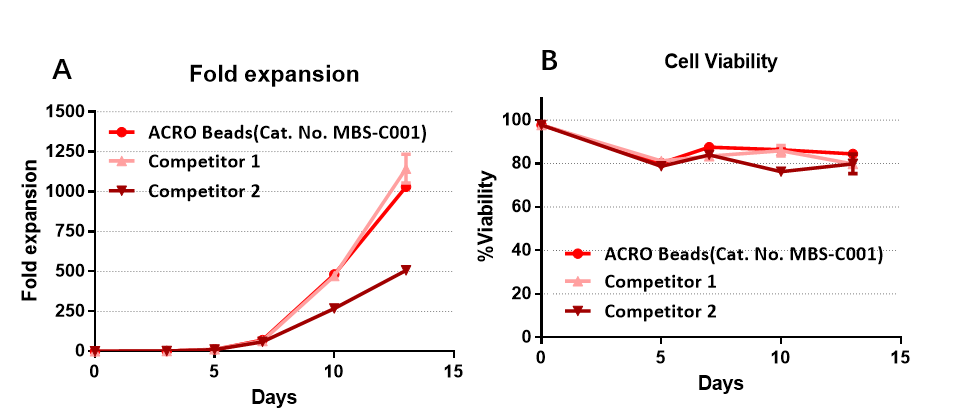
The purified human T cells were stimulated using Anti-CD3/CD28 Antibody-coupled Magnetic Beads (Cat. No.?MBS-C001) and competitor’s beads respectively. Cells were expanded in T cell culture medium supplemented with 4ng/mL of rhIL-2 Protein (Acrobiosystems, Cat. No. IL2-H4113). Activated Cells were expanded for up to 13 days (A) with high cell viability (B).
★更多T細(xì)胞激活試劑Anti-CD3 antibody(clone: OKT3Anti-CD28 antibod
GMP級(jí)別細(xì)胞因子
?

ACROBiosystems
inquiry@acrobiosystems.com
15117918562
(備注:姓名+公司)
?
參考文獻(xiàn)
[1] Kay, J.E., 1991. Mechanisms of T lymphocyteactivation. Immunology Letters 29, 51 – 54
[2] 醫(yī)學(xué)免疫學(xué)-第7版
[3] Trickett A, Kwan YL. T cellstimulation and expansion using anti-CD3/CD28 beads. J Immunol Methods. 2003Apr 1;275(1-2):251-5.
[4] Kalos M, Levine BL, Porter DL, KatzS, Grupp SA, Bagg A, June CH: T cells with chimeric antigen receptors havepotent antitumor effects and can establish memory in patients with advancedleukemia. Sci Transl Med 2011, 3:95ra73.
[5] Hollyman D, Stefanski J, PrzybylowskiM, Bartido S, Borquez- Ojeada O, Taylor C, Yeh R, Capacio V, Olszewska M, HoseyJ et al.: Manufacturing validation of biologically functional T cells targetedto CD19 antigen for autologous adoptive cell therapy. J Immunother 2009, 32:169-180.
[6]Casati A, Varghaei-Nahvi A, FeldmanSA, Assenmacher M, Rosenberg SA, Dudley ME, Scheffold A: Clinical-scaleselection and viral transduction of human na?¨ve and central memory CD8+ T cells for adoptive cell therapy ofcancer patients. Cancer Immunol Immunother 2013, 62:1563-1573.
[7] Barrett DM, Singh N, Liu X, JiangS, June CH, Grupp SA, Zhao Y: Relation of clinical culture method to T-cellmemory status and efficacy in xenograft models of adoptive immunotherapy. Cytotherapy2014, 16:619-630.
?